

Older dogs • A care-first budget

Make older-dog insurance sustainable

Protect the money needed for current care before deciding what you can spend on insurance for future eligible problems.

Owner beside a resting older-looking dark-coated dog
✓ Policy-first ✓ Independent ✓ Useful checks
Direct answer
Affordable insurance for an older dog has to fit beside the care you already pay for, not replace that budget. Confirm whether the offer includes illness protection at the dog’s age, separate existing-condition expenses from insurable future risks, and compare changes to an existing policy before switching. A lower premium is useful only if the remaining protection and owner costs are sustainable.
What to know

Ring-fence the care that insurance will not replace

Start with the dog’s current prescriptions, planned follow-up, routine care and any known exclusions. Use actual veterinary estimates or recent receipts where available. Treat those expenses as commitments to fund, rather than money you expect a new insurer to release.

Then identify how much recurring money is genuinely available for premiums and how much cash can remain accessible for a future bill. Avoid counting the same savings twice, once as an annual premium fund and again as the emergency reserve.

Illustration: a household has $170 a month available for dog care after ordinary household expenses. If known care uses $95, that leaves $75 for insurance and further reserves, not a $170 premium budget. These are fictional planning figures, not typical costs for older dogs.

What to know

An age-eligible offer may have a different scope

Current product example What it establishes What it does not establish
ASPCA Pet Health Insurance senior-dog offer Its materials advertise no upper enrollment-age restriction. That this dog’s existing problems are eligible or the price fits your budget.
Embrace new enrollment Its dog page distinguishes accident-and-illness entry below age 15 from accident-only entry at 15 or older. That an injury-only offer substitutes for illness protection, or that existing customers lose illness cover on that birthday.

These are current official product descriptions, subject to the offered state terms and underwriting. They are not an exhaustive market list. Get the scope in writing before spending time optimizing the price. A plan can accept an older animal while leaving the main expense you hoped to insure outside coverage.
Compare

If the renewal is too expensive, compare three actions

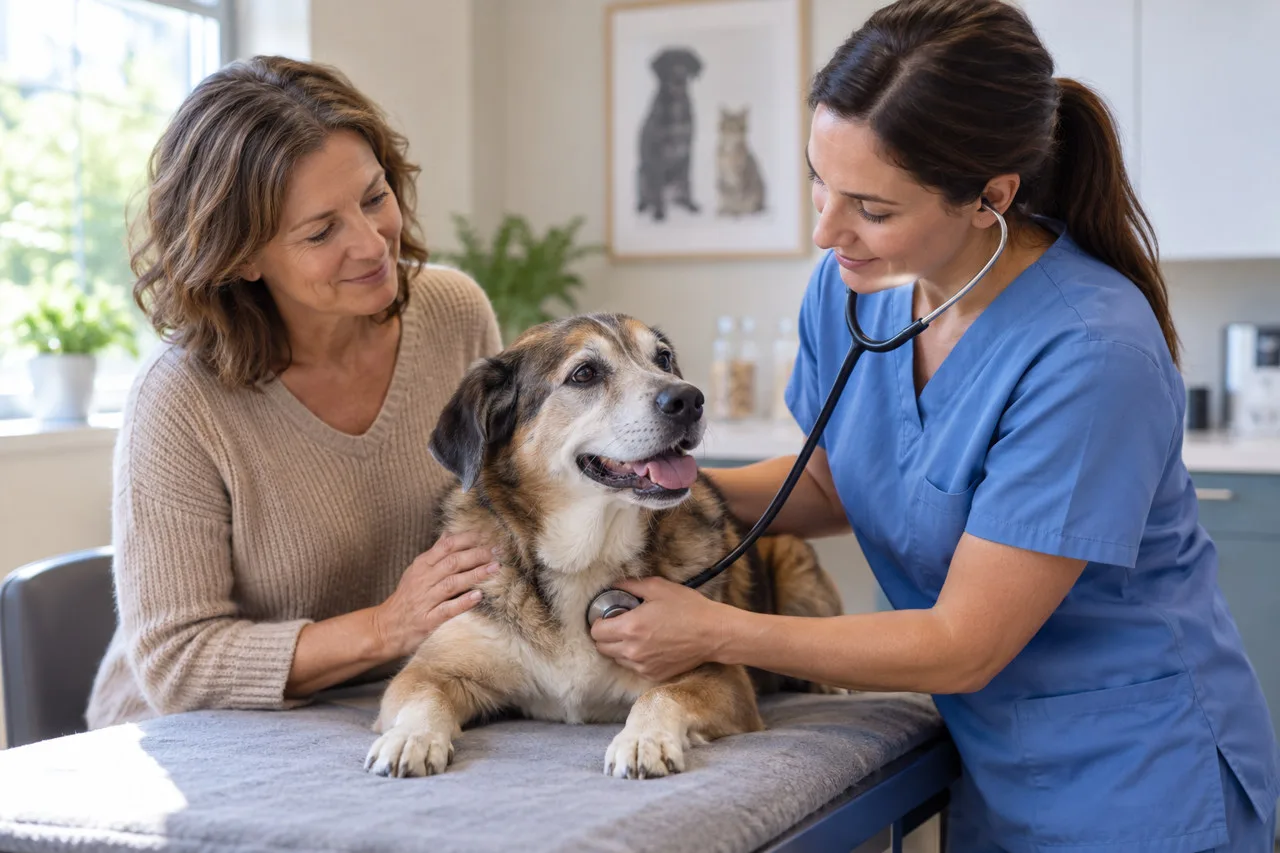
Owner and veterinary professional beside a dog
Separate the existing care budget from the price of future insurance protection.

Keep: record the renewal price and the protection already established for eligible ongoing conditions. This is the baseline, not an automatic recommendation.

Adjust: ask the current insurer to price available changes separately. Identify which benefit or cost-sharing change produces enough saving to close the budget gap. Ask whether reducing cover would be reversible and what later underwriting or timing restrictions apply.

Replace: collect a new offer and identify the history that the replacement may exclude. A monthly saving should be considered alongside the care that would shift back to you. Do not cancel the current contract first and investigate those consequences later.

If the budget gap is $18 a month, an option saving $9 does not solve it. Combining changes may be necessary, but record the consequence of each. There is no verified renewal projection here; leave room for uncertainty rather than assuming the next premium will stay level.

Decision guide

Choose the compromise you can fund

A higher deductible can lower a premium while increasing the amount you must handle around a claim. A lower reimbursement percentage can create a larger owner share on expensive treatment. A lower limit can preserve some protection while leaving more exposure in a costly period. These changes are not interchangeable.

Ask the insurer to demonstrate each surviving offer against a hypothetical new eligible illness, using its calculation rules. Keep known excluded care outside the illustration. If the resulting owner share cannot be funded, the cheaper premium may be impractical even when the annual arithmetic looks attractive.

Accident-only may be a deliberate fallback if that is the protection you can afford and want. Label the illness gap clearly. It should not be presented as comprehensive senior-dog health coverage simply because the dog is accepted.

Decision guide

Write down what the decision preserves

A useful decision note names the premium you can sustain, the future risk the policy still addresses and the care you will fund separately. Include the date of any current-policy change and the unanswered questions, especially around ongoing conditions.

If no offer fits after honest budgeting, that is a meaningful result. Discuss the care plan and payment arrangements with the veterinarian, and revisit the insurance decision when circumstances change. Do not delay necessary care while searching for a policy to pay for an already known problem.

Evidence

Sources and policy context

These public references support the consumer or veterinary context. Named insurer details were checked in official product materials; the policy offered for your pet and state determines the actual terms.

Next step

Compare Current Pet Insurance Rates

Check current options for your pet and location, then compare the policy details, exclusions, costs, and eligibility before choosing.

Compare the policy before you choose Check the actual offer, exclusions and out-of-pocket terms.
See Rate Options